
Fire safety is an important consideration when selecting materials for modern building façades and wall cladding. Fire rated ACP provides an aluminum composite panel solution designed to offer improved fire performance while maintaining the lightweight construction and modern appearance associated with ACP.
Used in commercial buildings, offices, residential developments, hotels, retail spaces, and other architectural projects, fire-rated aluminum composite panels can combine design flexibility with specific fire-safety requirements.
What Is Fire Rated ACP?
Fire rated ACP is an aluminum composite panel manufactured with a core designed to provide improved resistance to fire. A typical panel consists of aluminum skins bonded to a central core, with the core material playing an important role in the panel’s fire performance.
Different manufacturers offer different core constructions and fire classifications. Therefore, buyers should always check the technical specifications and relevant test documentation for the exact product rather than assuming that every panel described as “fire rated” has the same performance.
For projects comparing different aluminum panel products, an aluminium composite panel sheet can also be considered according to the required thickness, surface finish, core material, and application.
Benefits of Fire Rated ACP
Improved Fire Performance
The main advantage of fire rated ACP is its specially designed core and construction. Depending on the product, it can achieve a higher fire classification than standard ACP.
The required fire performance depends on the building type, height, location, occupancy, and applicable building regulations. Project teams should confirm the required classification before selecting a product.
Lightweight Construction
Although designed with improved fire performance, ACP remains relatively lightweight compared with many traditional cladding materials.
This makes panels easier to transport, handle, fabricate, and install. However, the supporting structure and fixing system must still be properly designed for the specific project.
Design Flexibility
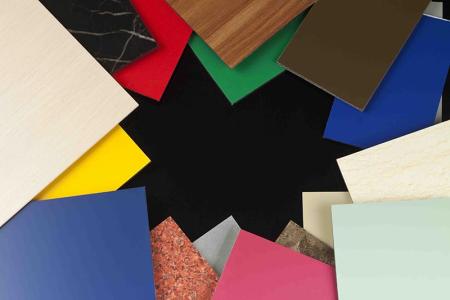
Fire-rated ACP is available in various colors, textures, and surface finishes. Architects can therefore incorporate fire-performance requirements without necessarily compromising the desired appearance.
White, black, metallic, matte, and wood-effect finishes can be used to create different architectural styles.
Easy Fabrication
Depending on the product, ACP can be cut, drilled, routed, and folded into different shapes. This allows panels to be adapted around windows, doors, columns, corners, and other architectural features.
Fabrication should always follow the manufacturer’s recommendations to maintain the intended product performance.
Applications of Fire Rated ACP
Fire rated ACP is commonly considered for exterior building façades where fire performance is an important part of material selection.
It can be used on commercial buildings, offices, hotels, residential developments, retail properties, and other structures. For exterior applications, fire performance should be evaluated together with weather resistance, coating durability, panel thickness, aluminum skin thickness, and fixing details.
Fire-rated ACP can also be used for selected interior wall applications, including reception areas, corridors, feature walls, retail interiors, and commercial spaces. The appropriate specification depends on the building regulations and conditions of the individual project.
Choosing the Right Fire Rated ACP
Several specifications should be checked before purchasing.
Core Material
The core is one of the most important components affecting fire performance. Different core materials provide different characteristics, so buyers should request technical documentation for the exact product.
Panel Thickness
Panel thickness should be selected according to the application, panel dimensions, support spacing, and installation system. Thickness alone does not determine fire performance.
Aluminum Skin Thickness
The aluminum skins contribute to the panel’s rigidity and fabrication characteristics. When comparing products, buyers should consider both total panel thickness and aluminum skin thickness.
Fire Classification
Always verify the actual fire classification through relevant test reports or certification. Different markets use different testing systems, so certification should correspond to the requirements of the project location.
Fire Rated ACP and Cost
Fire-rated panels can cost more than conventional ACP because of their specialized core construction and testing requirements.
When comparing quotations, buyers should consider the complete specification rather than looking only at the material price. Factors such as core material, aluminum skin thickness, coating, panel thickness, order quantity, and fabrication can all affect the final cost.
Researching aluminium acp sheet price can also help buyers understand how panel specifications influence market pricing.
A lower quotation does not necessarily represent better value if the product has a different fire classification or technical specification.
Installation Considerations
Correct installation is essential to the performance of any ACP system. Supporting structures, fixing methods, joints, sealants, insulation, and fire barriers can all affect the performance of the completed wall or façade system.
Before installation, contractors should verify the substrate, panel dimensions, fixing details, and joint layout. Particular attention should be given to corners, window openings, penetrations, and connections between different materials.
Installation should follow the manufacturer’s instructions and the approved project design.
Final Thoughts
Fire rated ACP offers a practical combination of architectural flexibility, lightweight construction, and improved fire performance. It can be suitable for a wide range of façade and wall-cladding applications when the correct product specification is selected.
Before purchasing, buyers should verify the core material, panel thickness, aluminum skin thickness, fire classification, surface finish, technical documentation, and installation requirements.
Selecting the right product based on both fire-safety requirements and architectural needs can help create a cladding system that is functional, durable, and appropriate for the project’s specifications.